
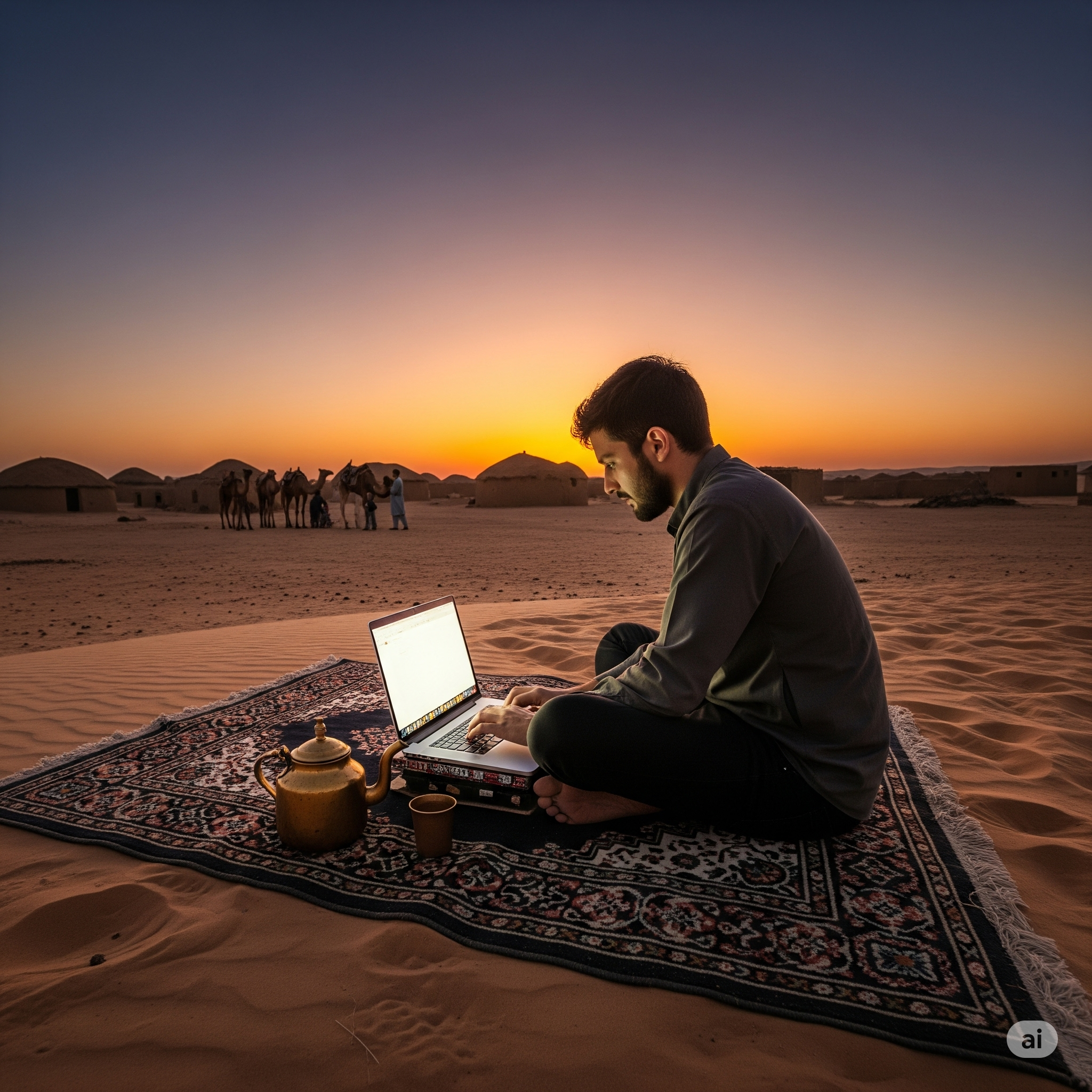
Rural freelancers of Pakistan are proving that global success doesn’t require a city address. One remarkable example is Abdul Mateen, a self-taught freelancer from the deserts of Cholistan. In a place where internet signals flicker like mirages and opportunities are scarce, Mateen turned his village’s lone internet connection into a gateway to international clients.
His journey reflects a growing wave of rural freelancers of Pakistan who, despite limited resources and tough conditions, are tapping into the global gig economy—and thriving against the odds.
The Rise of Rural Digital Talent
Pakistan’s freelance ecosystem is often centered on urban hubs like Lahore, Karachi, and Islamabad. But a quieter, no-less-impressive transformation is happening beyond the cities. Rural freelancers are proving that talent needs no postcode.
According to the Pakistan Software Export Board, the freelance sector contributes over $400 million annually to the economy. And rural freelancers are playing a growing role in this success.
Abdul Mateen: From Sand Dunes to Screens
With no formal tech background and living miles from the nearest city, Abdul Mateen began learning graphic design through YouTube tutorials on a shared mobile hotspot. His first gig? Designing a logo for a Canadian client, which paid more than his monthly local income.
Today, Mateen works with clients across five countries. His earnings have enabled him to buy solar panels, expand local connectivity, and even train other youth in his village.
Key Lesson: Resourcefulness can bridge even the widest infrastructure gap. Mateen leveraged limited tools and abundant grit to break into global markets.
Common Challenges Facing Rural Freelancers
Freelancers in remote areas face more than just slow internet:
- Power Outages: Frequent load shedding makes consistent work difficult.
- Limited Access to Equipment: Many start with outdated computers or shared devices.
- Social Pressure: In some communities, online work is still misunderstood or undervalued.
- Payment Barriers: Access to Payoneer, Wise, or other digital banking tools is often limited.
Yet despite these obstacles, rural freelancers are not just surviving—they’re thriving.
How They’re Making It Work
- Shared Workstations: Villages often pool funds to buy a laptop or internet device, creating informal coworking spaces.
- Time Optimization: Freelancers schedule uploads and downloads during off-peak hours.
- Offline Skills Building: They use offline tools and download learning content in bulk to study without continuous internet.
- Mentorship Circles: Rural freelancers often rely on WhatsApp or Facebook groups to share leads, tips, and motivation.
Scaling Impact: From Individual Wins to Community Change
As more freelancers find success, the ripple effect is tangible.
- New income flows into underserved regions.
- Skills training is passed down to others.
- Stereotypes about rural capability are shattered.
Abdul Mateen is now helping build a small freelance hub in Cholistan, mentoring younger locals and proving that with the right mindset, even the remotest places can plug into the digital economy.
Government Support for Rural Freelancers
While individual determination plays a huge role in the success of rural freelancers, Pakistan’s government has also launched several initiatives to help bridge the skills gap and connect remote talent with global opportunities.
One of the most prominent programs is DigiSkills.pk, a flagship initiative of the Ministry of Information Technology and Telecommunication, executed by the Virtual University of Pakistan. This free, online platform offers training in high-demand skills such as freelancing, digital marketing, graphic design, SEO, and e-commerce management.
Key features for rural learners include:
- Online and Accessible – Courses are delivered entirely online via a Learning Management System (LMS), enabling participation from anywhere with internet access.
- Localized Content – Materials are provided in a mix of Urdu and English, making them easier to understand for learners from different backgrounds.
- Proven Impact – Millions have been trained nationwide, with a strong emphasis on youth from rural and remote areas.
Other Key Initiatives
- e-Rozgaar – Operated by the Punjab Information Technology Board (PITB), it offers both online and in-person training centers to equip young people with freelancing skills and reduce unemployment.
- National Vocational & Technical Training Commission (NAVTTC) – Oversees vocational programs across Pakistan, increasingly integrating digital and IT courses to enhance employability.
- Pakistan Skill Development Fund (PSDF) – Partners with training providers to deliver IT, digital marketing, and vocational courses, often targeting marginalized communities in rural areas.
- Provincial Programs – Provinces like Khyber Pakhtunkhwa run their own tailored digital skills programs, including initiatives in newly merged districts.
These initiatives are essential to reducing the urban–rural digital gap and enabling rural talent to compete in the global freelance marketplace. By combining self-driven learning with these free or subsidized programs, rural freelancers can gain the skills, confidence, and network needed to thrive online.
Final Word: The Frontier of Freelancing is Rural
The global freelance market doesn’t care where you live—only what you can deliver. Pakistan’s rural freelancers are rising proof of that. They’re navigating bandwidth with brilliance, beating odds with innovation, and turning once-overlooked regions into emerging talent pools.
From Cholistan to clients around the world, the future of freelancing in Pakistan is not just urban—it’s everywhere.
Related : Small-Town E-Commerce in Pakistan: The Bahawalnagar Model


One thought on “Rural Freelancers of Pakistan: From Villages to Global Clients”