
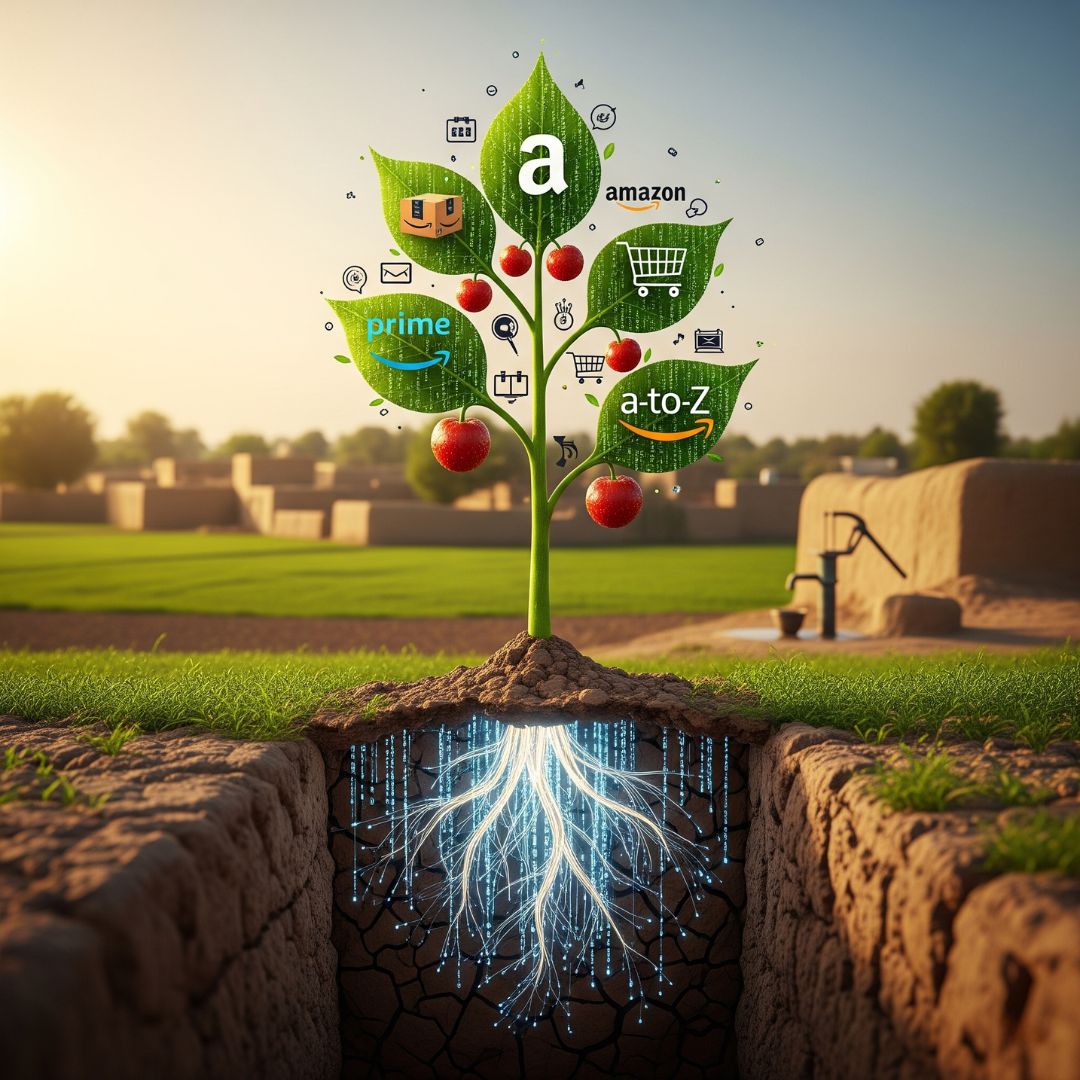
Small-town e-commerce in Pakistan is quietly reshaping local economies—and Bahawalnagar is leading the charge. At the heart of this transformation is Tahir Saeed, a self-made entrepreneur who built an Amazon-based business from scratch. What began as a solo effort to market local products globally has now grown into a movement—one that’s training and employing dozens of freelancers in a region often overlooked by the digital economy.
Tahir’s model blends e-commerce and freelancing into a powerful engine of local empowerment. By creating task-based roles in sourcing, listing, and customer service, he’s made it possible for youth and women to earn from home—no relocation, no fancy degrees. His success proves that small-town e-commerce in Pakistan is not just a possibility, but a path to inclusive growth and lasting impact.
A Business Grown from Local Soil
Tahir’s journey began with a simple idea: source quality products from local suppliers—textiles, handicrafts, packaged foods—and market them online to global buyers. Unlike big urban sellers, he leveraged local knowledge, unique packaging, and niche storytelling.
He gradually trained youth and women from his town in:
- Product sourcing and photography
- Listing optimization (titles, descriptions, keywords)
- Order fulfillment and customer service
- Inventory management and packaging
Today, this micro-enterprise employs more than 50 local freelancers, many of whom had never seen a marketplace beyond the village bazaar.
How Freelancing Propelled the Model
Tahir’s business model is hybrid: a full-fledged online shop powered by a distributed freelance workforce. By integrating local talent into the global e‑commerce ecosystem, he:
- Minimizes fixed overhead by hiring remote freelancers
- Keeps operations locally grounded, making logistics easier
- Builds digital skills among youth without requiring relocation
Roles include product listers, digital marketers, design assistants, packagers, and customer support—all trained by Tahir and his team.
Why This Matters for Small-Town Pakistan
- Income Generation: Freelancers are paid per task or project, turning rural talent into income-earners.
- Skill Development: Trainees learn digital tools and workflow that build long-term employability.
- Social Impact: Local households benefit when more members join the digital economy.
- Cultural Amplification: Traditional crafts and foods find global customers while preserving heritage.
Building the Model: Key Lessons from Bahawalnagar
- Local Sourcing + Global Access: Partner with regional producers and market their items worldwide for higher margins.
- Task-Based Micro Jobs: Small, finishable tasks (photo editing, description writing) suit remote freelancers and reward consistency.
- Training with Real Work: Apprenticeship-style mentorship helps beginners build experience on actual listings.
- Shared Growth: As the business expands, trainees evolve into trusted long-term collaborators.
- Community Anchoring: Rather than moving workers out of town, this model empowers them where they live.
Real Impacts: Stories from Bahawalnagar
- Sana, a 23-year-old graphic design trainee, moved from working in a local storefront to listing hundreds of products on Amazon as a freelance assistant.
- Farhan, previously unemployed, now invoices a regional handicraft guru for one-packaging content and earns double what he used to.
- Rukhsana, a stay-at-home mother, now manages customer support messages part-time and earns a stable side income—while still managing home duties.
The Bigger Picture: This Model’s Potential
- Replication Across Towns: As Pakistan’s rural e‑commerce potential grows, similar models can take root in cities like Dera Ghazi Khan, Mardan, or Mirpur.
- Freelancer Networks: These small-town freelancers can form networks, later offering services beyond e‑commerce, like virtual assistant support or content writing.
- Complement to Urban Crowdsourcing: While urban hubs dominate most freelancing, these micro‑pilots can distribute opportunity more equitably.
Your Playbook: Launching a Local E‑Commerce Freelance Hub
If you’re inspired to replicate this success:
- Identify local products with export potential
- Design roles that local talent can perform remotely
- Offer structured, hands-on training first
- Use Fiverr or Upwork to test and validate freelancers
- Expand into micro-entrepreneurship: hire lead freelancers as regional trainers
Final Thoughts
What started with a bold idea in Bahawalnagar has become a template for inclusive digital entrepreneurship. By blending e-commerce and local freelancing, Tahir Saeed is showing that opportunity doesn’t have to be urban—it can bloom anywhere with the right strategy.
This model isn’t just about profits. It’s about dignity, stability, and rewriting the narrative of small towns. Thanks to Tahir, Bahawalnagar isn’t waiting for opportunity—it’s creating it.
Related : Rural Freelancers of Pakistan: From Villages to Global Clients