
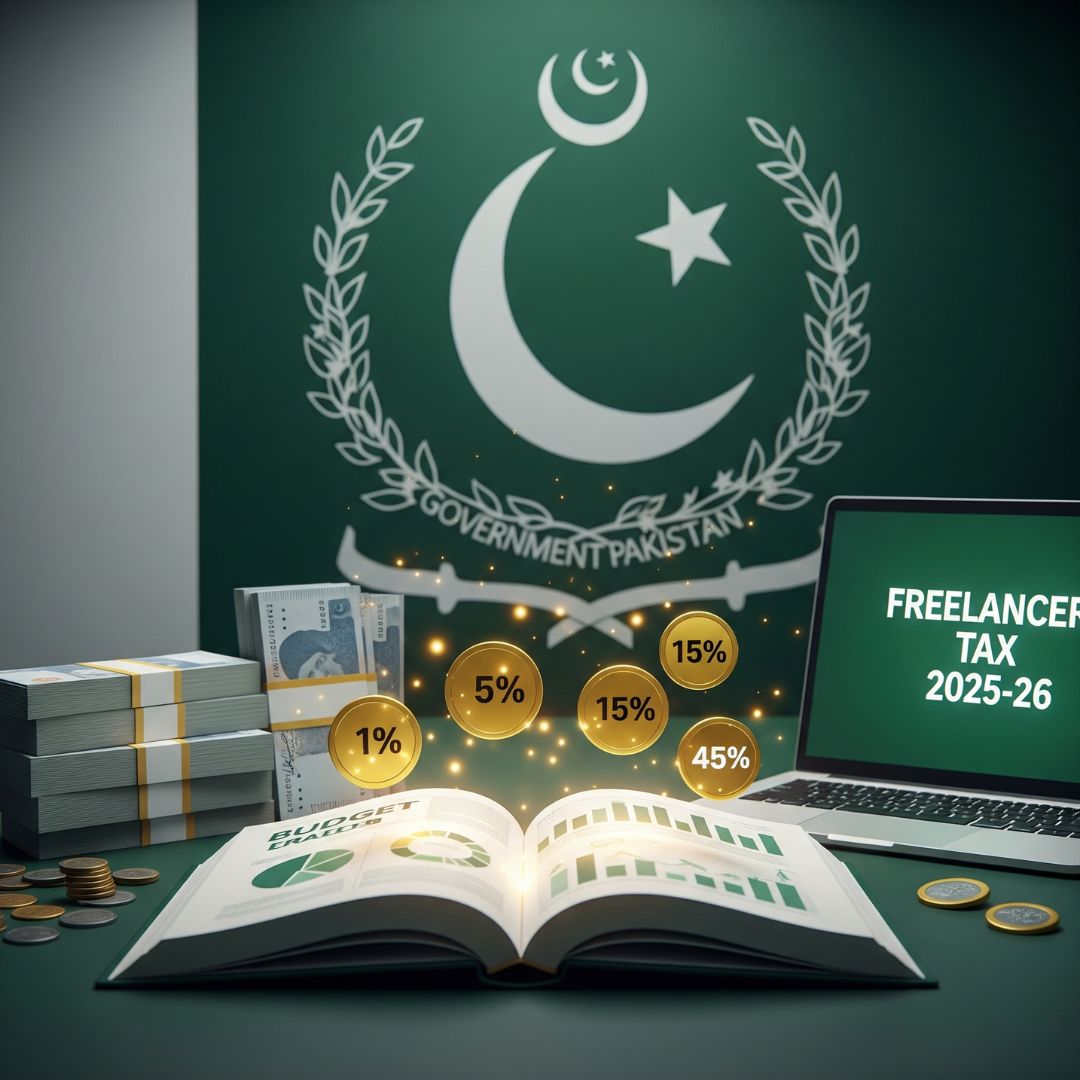
Freelancer taxes in Pakistan have already changed following the Federal Budget 2025–26, bringing significant implications for digital professionals. With the removal of IT export tax exemptions, new withholding rates on remittances, and digital transaction taxes now in place, many freelancers and online sellers are adjusting to increased deductions and reporting responsibilities.
Understanding the updated landscape of freelancer taxes in Pakistan is essential—not just for compliance, but for protecting your income and strategically planning your earnings. Here’s what you need to know about these reforms and how to adapt effectively.
What’s Changed & Why It Matters
1. End of Full IT Export Exemption
While full tax exemption on IT export income remains in place, it’s slated to end on June 30, 2026. Exporters registered with the Pakistan Software Export Board (PSEB) can still enjoy a 0.25% final withholding tax—higher than before but favorable compared to standard rates. Unregistered exporters face 1% AIT on export proceeds.
2. Withholding Tax on Foreign Remittances
Starting July 1, 2025, remittances via Payoneer, Wise, or direct international transfers incur AIT at credit time: 1% for active tax filers, 2% for non-filers. Filers can adjust this amount in annual returns.
3. 5% Tax on Digital Creators & Ad Services
A 5% tax is now levied on income earned through digital platforms like YouTube, TikTok, and freelancing services. This also applies to digital advertising and subscription services via platforms like Google and Meta. Banks or payment intermediaries deduct it at source.
4. E-Commerce and Digital Payment Taxes
New provisions under Section 6A mandate taxes on local digital transactions.
- Digital payments: 1% tax by intermediaries
- Cash-on-delivery: 2% tax by courier/delivery partners
These taxes act as final discharge of liability and are applied by banks or couriers at checkout.
5. Updated Income Tax Slabs for Freelancers
Tax rates for non-salaried individuals (like freelancers) are:
- Up to PKR 600,000: 0%
- 600,001–1.2M: 15%
- 1.2M–1.6M: 20%
- 1.6M–3.2M: 30%
- 3.2M–5.6M: 40%
- Above 5.6M: 45%
6. Higher Withholding Tax on Local Services
Local service payments now include a 15% withholding tax, up from 11%. Filers can claim this deduction on their tax returns.
Modernizing Freelance Compliance: Tools & Trends
The 2025–26 budget isn’t just about higher taxes — it’s also about modernizing how Pakistan’s digital workforce engages with the tax system. These updates aim to bring freelancers into the formal economy while simplifying compliance.
1. Mandatory E-Invoicing
Starting mid-2025, all registered freelancers and service providers will be required to issue FBR-compliant e-invoices for their work. This ensures every transaction is recorded officially, making it easier to verify income and claim deductions.
2. Easier Tax Filing with Digital Tools
The FBR Iris portal and mobile app Tax Asaan have been updated to simplify return filing. You can now:
- Upload invoices directly.
- View withholding tax certificates from banks.
- Reconcile taxes deducted at source.
3. Push Toward Formalization
The government’s aim is to integrate freelancers into the formal economy — not only for tax collection but to offer benefits like:
- Easier access to business loans.
- Inclusion in Special Technology Zones.
- Opportunities under government-backed export and startup programs.
4. Why It Matters
Formal compliance can be a stepping stone to more stable, higher-paying clients — both locally and internationally. Being a filer with proper documentation signals professionalism and financial reliability.
Action Plan: How to Adapt as a Freelancer
1. Register as a Filer & Secure an NTN — Allows reclaiming withholding amounts and avoids penalty rates.
2. Register with PSEB — Seize the 0.25% rate on IT export earnings before June 2026.
3. Use Formal Channels — Remit through banks to qualify for existing exemptions before they fully end.
4. Update Your Pricing — Factor in tax changes into quotes so net earnings are preserved.
5. Keep Accurate Records — Save invoices, bank statements, and transaction screenshots.
6. Track Withholding — Document deductions from remittances and digital services.
7. Claim Eligible Deductions — Home office, internet, software expenses are deductible.
8. Consult a Tax Professional — Especially useful for navigating complex e-commerce or export income scenarios.
Why Freelancer Taxes in Pakistan Now Matter More Than Ever
The Budget 2025–26 marks a pivotal moment: freelancers are no longer in the shadows of Pakistan’s economy. By staying compliant, registering timely, and recalibrating your pricing strategy, you can continue thriving—profitably and sustainably.

Nice blog here Also your site loads up fast What host are you using Can I get your affiliate link to your host I wish my web site loaded up as quickly as yours lol
Your blog is like a beacon of light in the vast expanse of the internet. Your thoughtful analysis and insightful commentary never fail to leave a lasting impression. Thank you for all that you do.
Your blog is a shining example of excellence in content creation. I’m continually impressed by the depth of your knowledge and the clarity of your writing. Thank you for all that you do.